





#CountryParks
Search Result: 5

The Country Park Volunteer Scheme is co-organised by the Agriculture, Fisheries and Conservation Department (AFCD) and Friends of the Country Parks to arouse public awareness on protecting Hong Kong country parks through participating in management, education and conservation work of the country parks. It also offers valuable opportunities for nature lovers to serve the society.All successful candidates of the “Country Park Volunteer Scheme” will be invited to attend a “Volunteer Orientation Class” and a “Basic Training for Volunteer Trainees”. After completion of the orientation class, training and passing the assessment, trainees shall enroll 20-hour volunteer services to obtain practical experience on different types of services. Afterwards, the participant is qualified as a Country Parks Volunteer.

Hiking is a physical activity with both physical and mental benefits. It can improve your physical fitness and help you relax. You may need different skills for any particular sport, and each sport, including hiking, has its own unique skills. If you can master the skills of hiking, you can reduce energy loss and minimise the chance of getting hurt. Here are some hiking tips by Enjoy Hiking: BasicsWalk with the entire soles of your boots touching the ground, to spread the load evenly across your feet.Free your hands or hold a walking stick to assist balance.Maintain a steady and natural pace, and one that suits you.Breathe smoothly, steadily and in rhythm with your pace.Avoid running or jogging.Avoid excessive conversation, which may affect your breathing rhythm and concentration.Concentrate and always look where you tread. Be observant and vigilant to what is lying aheadTo avoid accidents, always stop walking when you read your map.When moving forward, keep an adequate distance from other hikersHiking ProgrammePlan to end your hike two hours before sunset.Use the Naismith Law to estimate the time required for your hike. According to this law, a fit adult can cover 5 km of level ground per hour, and an extra hour should be added for every 600 m of uphill hiking. For hiking in Hong Kong, it is best to base on an hourly rate of 4 km for level ground, and an extra hour for every 500 m of uphill hiking.Select a gentle slope to go uphill. Avoid challenging yourself with a very steep or treacherous route right at the beginning.The party's entire load should be distributed among all members of the group, taking into account the strength of each member.UphillMaintain a natural pace and avoid making very large strides.Avoid climbing at high speed. Don't rest too frequently or for too long. When you feel tired, reduce your speed instead of stopping.Tread only on secure stable ground, where there is enough foot room.Use the strength of your legs to climb. Avoid pulling yourself up by grasping small trees or branches, as they may break leading to a fall.Keep your upper body straight.When going up very steep slopes, don't go straight ahead. Move sideways and work your up in a series of zigzags. DownhillNever run downhill ―this is a certain way to have a dangerous fall.Tread only on secure stable ground, with enough foot room.Avoid treading on wet slippery ground, especially wet clay or grasses. But if there is no other way, proceed with caution and keep your body low.Use the strength of your legs to descend. Avoid sliding down by grasping small trees or branches. This indicates you are half out of control. Branches can break and, even if they don't, you will damage the vegetation.Keep your upper body straight.When moving down very steep slopes, move sideways and work down in a series of zigzags. Food and DrinkNever eat or drink while moving.Relax to take refreshments. Don't hurry your food or drink.Never drink untreated water from hill streams or eat any wild plants or mushrooms.Don't consume icy drinks immediately after a long hike, when your body temperature is still high.Never drink alcohol during a hike. Foot CareWear suitable hiking shoes. Wear new shoes on level ground a few times before going on a serious hike. This will ensure the surface material is soft and the shoes are comfortably worn in to the shape of your feet. Bootlaces should not be too tight.Wear two pairs of socks made of soft, fluffy and absorbent material.Trim your toenails, and try to keep your feet clean and dry. Stop walking if your feet are uncomfortable. Inspect them and treat any wounds promptly.If there are signs of blisters, put a plaster on the affected area.Blisters should be dressed with an absorbent plaster that eliminates moisture.Serious blisters should be treated with antiseptic. Pierce the blisters with a sterile pin and squeeze out any moisture. Avoid touching the wounds directly, and cover them with an antiseptic dressing right away.For soreness or cramps in the legs, massage the leg muscles. If possible, soak feet in warm water, or use a menthol-based heat rub ointment. Moreover, to be well prepared for your next hiking trip, you may check out the following websites for more information!Leisure and Cultural Services Department - Hiking Scheme - Safety Hints on HikingCentre for Health Protection - A Guide for Hikers Source: Agriculture, Fisheries and Conservation Department Enjoy Hiking website
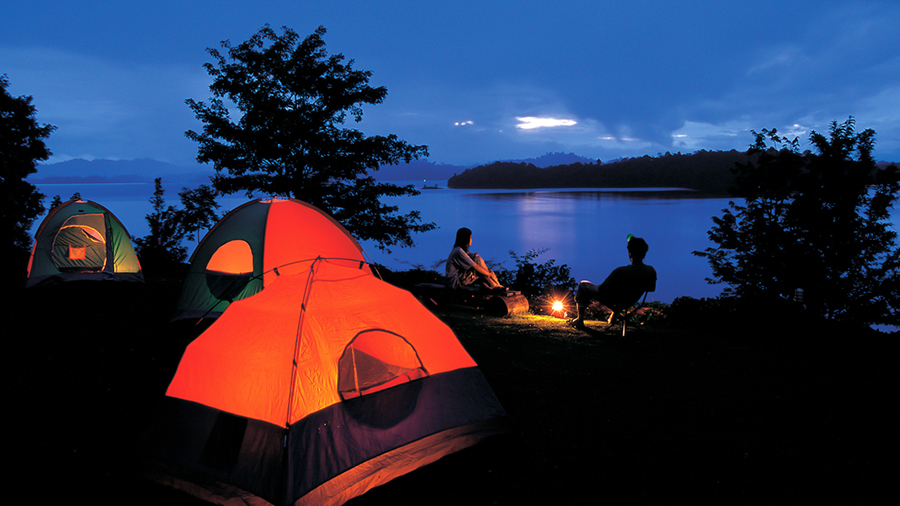
There are over 40 campsites designated by the Agricultural, Fisheries and Conservation Department (AFCD) at country parks across Hong Kong, such as the Lau Shui Heung Campsite, the Lead Mine Pass Campsite and the Hok Tau Campsite. The Pui O Campsite and the Chong Hing Water Sports Centre are both located at Lantau Island and managed by the Leisure and Cultural Services Department (LCSD). Other than these governmental campsites, there are some camping services and campsites provided by non-government organisations.There are plenty of choices among these designated camping sites, get set and explore the nature fun now!Campsites managed by the Leisure and Cultural Services DepartmentPui O Campsite Chong Hing Water Sports Centre Campsites designated by the Agricultural, Fisheries and Conservation DepartmentLau Shui Heung Campsite Lead Mine Pass CampsiteHok Tau Campsite Rotary Club CampsiteChung Pui Campsite Twisk CampsiteSam A Chung Campsite Ho Pui CampsiteTung Ping Chau Campsite Tin Fu Tsai CampsiteWan Tsai South Campsite Nam Shan CampsiteWan Tsai West Campsite Pak Fu Tin CampsiteCheung Sheung Campsite Shap Long CampsiteHau Tong Kai Campsite Lo Kei Wan CampsiteTai Tan Campsite Shek Lam Chau CampsiteWong Shek Campsite Tai Long Wan CampsitePak Tam Au Campsite Kau Ling Chung CampsiteSai Wan Campsite Man Cheung Po CampsiteLong Ke Wan Campsite Nga Ying Kok CampsitePak Lap Campsite Tsin Yue Wan CampsiteYuen Ng Fan (Nam Fung Wan) Campsite Ngong Ping Campsite (Lantau)Po Kwu Wan Campsite Kong Ha Au CampsiteYee Ting Campsite Shek Pik CampsiteShui Long Wo Campsite Ham Tin Wan CampsiteNgong Ping Campsite (Ma On Shan) Tai Mong Tsai CampsiteTung Lung Chau Campsite *There is no mains water supply in countryside areas, and most campsites rely on natural mountain streams. During dry seasons, water shortages may occur, affecting the availability of water at several camping locations. To protect your health, any mountain water used for cooking or drinking must be thoroughly boiled and purified beforehand. When planning your trip, please check the water conditions at your chosen campsite. Campers may need to bring sufficient drinking and cooking water themselves. For details, please refer to "Camping Code and Regulations".Other non-government organisations providing tent camping servicesHong Kong Girl Guides Association Pok Hong Campsite Scout Association of Hong Kong Shatin Scout Centre Scout Association of Hong Kong Gilwell CampsiteScout Association of Hong Kong Choi Chee Ming Luen Kwong Scout CentreHong Kong Playground Association Tung Chung Outdoor Recreation Camp (Chinese version only) YMCA of Hong Kong Lamma Island Outdoor Centre Camps/Centres of subvented non-government organisations Chinese YMCA of Hong Kong Y's Men-YMCA Wong Yi Chau Youth Camp (Chinese version only)Hong Kong Playground Association Silvermine Bay Outdoor Recreation Camp Scout Association of Hong Kong Tai Tam Scout Centre Scout Association of Hong Kong Tung Tsz Scout Centre Scout Association of Hong Kong Pak Sha Wan Tam Wah Ching Sea Activities Centre For more details, please refer to the AFCD website or LCSD website

If you are planning a hike, it is important to have the proper hiking gear based on your personal needs and the nature of the activity. Here is the checklist for your reference -1. Backpack - Place light items at the bottom, heavier items in the middle, and the heaviest ones on the top. Put less frequently used items first and frequently used ones on the sides. Be sure weight is equally balanced on each side.- It should not exceed one third of your body weight. The maximum weight is 40lb. 2. Hiking shoes - ide toe box hiking shoes with deep and thick lugs on outsole are preferable.3. Socks4. Shirt - Wear sun protective/moisture-wicking/breathable long-sleeved shirt with collar to avoid sunburn on your arms and the back of your neck.5. Trousers - Sun protective/moisture-wicking/breathable loose-fitting trousers are preferable.6. Towel/cooling towel/arm sleeves7. Outer garments & windproof jacket/rain jacket8. Hat, sunglasses, umbrella, gloves9. Spare clothing10. Hiking stick11. Compass & map (Countryside series published by the Lands Department) 12. Illumination device13. Whistle14. Food & emergency food: Bring portable and conveniently packaged food with high calories, e.g. glucose, raisins, and other high energy food.15. Water bottle & water (Drinking water refilling stations in Country Parks)16. Personal drugs & first aid supplies17. Sunscreen and mosquito repellent 18. Mobile phone & battery/charger & charging cable (Mobile network services in Country Parks)19. Watch20. Mobile phoneBringing a mobile phone alone may not be enough, you also need to know how to seek help in an emergency! Hong Kong Police Force mobile app "HKSOS" can be of help! You have to activate the track function before heading outdoor, so that the app allows you to reach the 999 emergency centre in case of an emergency. The app also presents SOS messages in graphic and text, and sends the user’s location, making it accessible for individuals with hearing or speech impairments.
Before heading out for a hike, make sure you are well prepared—safety first!Source of information and useful links:Enjoy Hiking website of the Agriculture, Fisheries and Conservation DepartmentSafety Hints on Hiking of the Leisure and Cultural Services DepartmentHong Kong Hiking Trail Weather Service of the Hong Kong ObservatoryMeans of Communications in the Countryside of GovHK

The 25th country park in Hong Kong - The Robin's Nest Country Park has been established!Country Park's Overview The Robin's Nest Country Park, occupying an area of about 530 hectares at Sha Tau Kok in Northeastern New Territories, lies on a continuum of mountain ridges stretching from the Shenzhen Wutong Mountain Scenic Area to the north and Pat Sin Leng Country Park to the south. Natural habitats in the park remain untouched due to its remoteness at the border.The Robin's Nest Country Park is characterised by the rich floral and faunal diversity, including various species of conservation interest. The abandoned Lin Ma Hang Lead Mine in the park supports one of the most important bat colonies in Hong Kong and was designated as a Site of Special Scientific Interest. Part of the Robin's Nest Country Park falls within the former Frontier Closed Area and harbors a diverse collection of war relics. Lin Ma Hang Lead Mine was one of the most extensive mining systems in Hong Kong's mining history. Together with the MacIntosh Forts, Grade-2 historic buildings, they are the key heritage resources in the Robin's Nest Country Park.Hiking TrailsThere are two hiking trails in the Robin's Nest Country Park, namely Robin's Nest Country Trail and Lin Ma Hang Country Trail. Information boards, waymarks and distance posts are installed along the trails. Viewing points and interpretation panels are also set up at suitable locations to facilitate appreciation of nature and cultural heritages.Transportation InformationTo the start point of Robin's Nest Country TrailTake public transport to Tam Shui Hang Bus Station at Sha Tau Kok Road – Shek Chung Au, and walk along Shan Tsui Village Road for about 30mins to the start point of Robin’s Nest Country Trail.Green Minibus route – 55KKowloon Motor Bus (KMB) routes – 78KTo the start point of Lin Ma Hang Country TrailTake minibus at Sheung Shui Station and get off at Lin Ma Hang Road before the Frontier Closed Area. Walk along the connecting path for 20mins to arrive at the Lin Ma Hang Village.Green Minibus route – 59K (Please take the one towards Lin Ma Hang at Sheung Shui MTR Station)Please note a section of Lin Ma Hang Road near Lin Ma Hang Village is within the Frontier Closed Area (FCA). Visitors to/from Lin Ma Hang Village who wish to take minibus route 59K are required to possess a valid Frontier Closed Area Permit, or they have to get on or off before the FCA and use the connecting path to hike to Lin Ma Hang Village. Hikers should take note of the waymarks onsite. Please refer to the webpages on Closed Area Permit and the New FCA Boundary of the Hong Kong Police Force for information on access to FCA. (Video in Chinese only)For more details of the Robin's Nest Country Park, please visit the website of the Agriculture, Fisheries and Conservation Department.