





#HKDSE
Search Result: 8
Retaking the HKDSE is not an easy decision. Students should carefully assess their own situation and consider whether they have the confidence and ability to improve their performance in the coming year. Once the decision is made, they should pay close attention to registration details and related arrangements so that they can plan their retake more strategically.01 | Four Key Considerations for RetakingWith reference to Hok Yau Club’s article “Four Major Considerations for Retaking the HKDSE” (Chinese version only), the following four factors may help students who are considering a retake make a more suitable and informed choice.- Reviewing HKDSE Experience: When reflecting on the previous HKDSE attempt, students should identify whether unsatisfactory results were due to insufficient preparation, underperformance on the exam day, or having already tried their best but still falling short. They should also evaluate whether they have a realistic chance of improving their performance in a second attempt, rather than relying solely on a risky, all‑or‑nothing effort. - Avoid Seeing Retaking as the Only Option: Retaking should not be viewed as the sole pathway. Students may consider whether they have other interests or strengths, and explore alternative education routes that may better align with their abilities and allow them to further develop their potential.- Choosing an Appropriate Mode of Retaking: Self‑study (i.e. entering the HKDSE as a private candidate) allows students to plan their own study schedule based on their grasp of different subjects. However, this mode lacks teacher guidance and peer support, making self‑discipline and perseverance particularly important. Repeating Secondary 6 at the current school or another school provides a more structured learning environment and addresses the limitations of self‑study. Nevertheless, as most daytime hours are spent in school, the time available for independent revision is relatively limited. Students must clearly understand their mastery of each subject and adjust their study pace accordingly.- Curriculum Updates and Changes in Assessment Arrangements: Students should note that the curriculum and assessment arrangements for the HKDSE will be adjusted starting from 2027, with changes being made to the assessment frameworks of three subjects. For details regarding the assessment formats and the weighting of individual papers for the relevant subjects, please refer to the latest examination documents or consult your teachers.02 | Being a Private CandidateA person may enter for the HKDSE as a private candidate provided that he/she has satisfied the requirements set out at (a) or (b) or (c) below:(a) The person has sat the previous HKDSE or an equivalent examination, or(b) The person has reached the age of 19 by 1 January of the year of the Examination, or(c) The person has completed or is currently pursuing a non-HKDSE curriculum equivalent to Secondary 6 as determined by the Hong Kong Examinations and Assessment Authority (HKEAA) in the year preceding the Examination.The HKEAA may consider applications from persons possessing other qualifications or pleading special circumstances. Persons who have sat other public examinations are expected to demonstrate a suitable level of competence in the same subject(s) entered for the Examination and may be required to provide supporting documents from their schools (if applicable). Persons who are currently pursuing an HKDSE curriculum will not normally be considered for special entry to the Examination. Exceptional cases may be considered on a case-by-case basis.Students can submit their applications through the HKDSE Online Services. For the registration details, please refer to Private Candidates - Entry Qualifications.03 | Repeating Secondary 6 at SchoolsStudents who wish to repeat Secondary 6 at another school may refer to the Education Bureau’s Life Planning website for the list of “Schools admitting HKDSE S6 repeaters from other schools”, which provides information on school arrangements and admission details.Sources:Hok Yau Club (Chinese version only)Hong Kong Examinations and Assessment AuthorityLife Planning Website of the Education Bureau

After completing the HKDSE, do you wish to pursue further studies but feel uncertain due to financial considerations? You may explore the following student financial assistance schemes, which may offer some financial support when you plan your next steps –Financial Assistance for Local Post-secondary & Tertiary Level StudiesIf you plan to pursue higher education locally, you may refer to the various financial assistance schemes offered by the Working Family and Student Financial Assistance Agency. You may also use the calculator tool available on the “SFO E-link” website to make an initial estimation of the subsidy amount or level you may be eligible for under different schemes, helping you plan your studies more effectively.1. Tertiary Student Finance Scheme - Publicly-funded Programmes (TSFS) provides means-tested financial assistance in the form of grant and/or loan to eligible full-time students taking up an exclusively publicly-funded student place of a recognised post-secondary programme.2. Non-means-tested Loan Scheme for Full-time Tertiary Students (NLSFT) is to complement the Tertiary Student Finance Scheme – Publicly-funded Programmes (TSFS) to provide loans to eligible students to settle tuition fees of recognised full-time study courses.3. Financial Assistance Scheme for Post-secondary Students (FASP) provides means-tested financial assistance in form of grant and/or loan to eligible full-time students pursuing locally-accredited, self-financing post-secondary education programmes at the level of associate degree, higher diploma or bachelor’s degree.4. Non-means-tested Loan Scheme for Post-secondary Students (NLSPS) is to complement the Financial Assistance Scheme for Post-secondary Students (FASP) to provide loans to eligible students to settle tuition fees of locally-accredited, self-financing full-time programmes at the level of associate degree, higher diploma or degree.5. Non-means-tested Loan Scheme for Post-secondary Students (ENLS) provides loans to eligible students to settle tuition fees of specific post-secondary/continuing and professional education courses studied in Hong Kong.6. Student Travel Subsidy (STS) provides travel subsidy to needy students attending a full-time day course up to first degree level in a recognised institution; residing more than 10 minutes’ walking distance away from their schools; and who need to travel to school by public transport.Financial Assistance for undergraduate studies on the MainlandIf you wish to pursue further studies on the Mainland, you may refer to the Education Bureau’s Mainland University Study Subsidy Scheme (MUSSS). This scheme aims to support Hong Kong students in pursuing undergraduate studies on the Mainland and ensure that no students will be deprived of post-secondary education opportunity due to a lack of means. MUSSS comprises two components: “means-tested subsidy” and “non-means-tested subsidy”. The subsidy is granted on a yearly basis, and the subsidised period is the normal duration of the undergraduate programme pursued by the student concerned in a designated Mainland institution. Eligible applicants can only receive either a means-tested subsidy or a non-means-tested subsidy in the same academic year. MUSSS is not subject to any quota.In addition, some Mainland universities also offer their own institutional scholarships, grants, or tuition waiver arrangements. As the details and application requirements vary across institutions, you are advised to check directly with the universities you intend to apply to for the most up‑to‑date information.Scholarships & GrantsYou may refer to the “Scholarship & Grants Search Tool” to explore information on scholarships and grants related to further studies in Hong Kong, the Mainland, or overseas, and to learn about the application requirements and coverage of different schemes.Financial Assistance for Local Continuing EducationThe Government also provides other financial assistance schemes to support young people in their self‑development and pursuit of continuing education.1. Diploma of Applied Education (DAE) Tuition Fee Reimbursement The Education Bureau launched the Diploma of Applied Education (DAE) Programme in the 2023/24 academic year in place of Diploma Yi Jin programme to provide an alternative pathway for secondary 6 school leavers as well as adult learners to obtain a formal qualification for the purposes of employment and further study (deemed comparable to the attainment of Level 2 standard in 5 subjects (including Chinese Language and English Language) in the HKDSE Examination). In this regard, DAE tuition fee reimbursement provides students with financial assistance in the form of tuition fee reimbursement. Students who fulfill the prescribed eligibility criteria can obtain 30%, 50% or 100% reimbursement of the actual tuition fees paid after the end of each school year.2. Financial Assistance Scheme for Designated Evening Adult Education Courses (FAEAEC) Financial assistance for Designated Evening Adult Education Courses (Secondary 1 to Secondary 6) is provided to adult learners attending evening secondary courses run by the Approved Course Providers in designated centres. Students who fulfill the prescribed criteria can obtain 30%, 50% or 100% reimbursement of the tuition fees paid after the end of each school term.資料來源:Working Family and Student Financial Assistance AgencyEducation Bureau
With the release of the DSE results just around the corner, it is natural to feel a mix of excitement and nerves. To help you get ready, we have put together a set of useful resources on further studies. By planning ahead, you will be in a much better position to navigate your next steps with confidence once the results are announced.Study Locally01 | Joint University Programmes Admissions System (JUPAS)The Education Bureau has prepared a “Designated Webpage for Secondary 6 Students”, where the JUPAS section highlights important notices, useful materials, and the admission requirements of JUPAS participating institutions. These resources can help you plan your future study pathway, including information on the Joint University Programmes Admissions System (JUPAS) and the Study Subsidy Scheme for Designated Professions/Sectors (SSSDP), which allocates bachelor’s degree places through JUPAS.In addition, many JUPAS participating institutions continue to offer flexible admissions arrangements this year. This allows candidates who may underperform in one subject but achieve strong overall results to still be considered by institutions. For details, please refer to the “Admission Requirements of JUPAS Participating institutions” in the JUPAS section mentioned above, as well as the Hok Yau Club’s article titled “A Comprehensive Guide to Flexible Admissions: How Institutions May Consider Candidates Who Fall Short in One DSE Subject” (Chinese only).02 | Programmes not covered by the JUPASTo assist students in programme selection and application, apart from locally-accredited self-financing post-secondary programmes, Information Portal for Accredited Post-secondary Programmes (iPASS) will also provide information on all locally accredited full-time higher diploma, associate degree and first degree programmes not covered by the JUPAS. These will include publicly-funded sub-degree programmes offered by the Vocational Training Council and publicly-funded degree programmes offered by the Hong Kong Academy for Performing Arts. Current HKDSE candidates may use the Electronic Advance Application System for Post-secondary Programmes (E-APP) to lodge advance applications for full-time locally-accredited sub-degree and undergraduate programmes that are not covered by the JUPAS.Non-Local Further StudiesApart from local study options, Secondary 6 graduates may also consider pursuing further studies in the Mainland or overseas. To support your planning, we have compiled key information on non‑local study pathways, giving you more directions to explore as you map out your future.01 | Study in the MainlandHong Kong students can currently gain admission to Mainland institutions through three major pathways, namely:1. Scheme for Admission of Hong Kong Students to Mainland Higher Education InstitutionsMainland universities participating in the scheme admit Hong Kong students based on their HKDSE results, exempting them from taking the Joint Entrance Examination for Mainland Institutions. For the latest updates and details on the Admission Scheme, please visit the Education Bureau website.2. National Education Exams Authority, People's Republic of China Joint Entrance Exam for Universities in PRC (Joint Entrance Examination for Mainland Institutions)The Joint Entrance Examination for Mainland Institutions is held around May in Hong Kong every year. Over 400 Mainland higher education institutions participate in it, and candidates are required to sit for the examination for five subjects, including Chinese, English, Mathematics, Physics / History, Chemistry / Geography. For further details, please refer to the latest announcements from The Education Examinations Authority of Guangdong Province (Chinese version only) and the Hong Kong Examinations and Assessment Authority (Chinese version only).3. Direct Admissions by Individual Mainland Higher Education InstitutionsThe Ministry of Education has authorised a number of Mainland higher education institutions, including Peking University, Tsinghua University, Jinan University, Huaqiao University, Fudan University and Shenzhen University, to conduct direct admissions in Hong Kong. Candidates may contact the respective Mainland institutions for enquiries.02 | Study OverseasWith the wide range of overseas institutions and programmes available, choosing the study option that best suits your goals is especially important. Before deciding to pursue studies abroad, remember to carefully consider the following factors before making your final choice.Local studies or non-local studies?How to choose the non-local studies destination?How to choose an overseas study programme?What should be noted before applying?For more details, students can refer to the Hok Yau Club's article “Study Abroad Exploration │ Four Questions About Overseas Education! A Visual Guide to Help You Decide”(Chinese version only).If you wish to learn more details about the application method, visa application, general information about study overseas, recognition of non-local qualifications, etc., please refer to "Studying Overseas" of the Education Bureau.Source:Education Bureau - "Designated Webpage for Secondary 6 Students"Education Bureau - Life Planning Information WebsiteConcourse for Self-financing Post-secondary EducationHok Yau Club Website (Chinese version only)

This year's Hong Kong Diploma of Secondary Education Examination (HKDSE) has already begun. We believe that all candidates have prepared well for their upcoming examinations! However, there are always moments when you feel nervous. Are you still worried about missing something before heading to the examination or before the results release? You can check out the following tips for HKDSE provided by the Education Bureau (EDB), to ensure that your final preparations are done and thus gain a peace of mind before the examination!HKDSE Exam TimetableItem Checklist for HKDSE Exam*Handbook for Candidates - Please click hereIn addition to the above preparation tips, the designated webpage for Secondary 6 (S6) students also provides other tips related to result release and multiple pathways ahead, in order to help candidates prepare for different stages under the HKDSE! If you wish to know more about HKDSE, further studies and employment information for S6 students, please visit the designated webpage for more information!>>EDB's Designated Webpage for S6 Students*Source of infographics: EDB's Designated Webpage for S6 Students
This year's Hong Kong Diploma of Secondary Education Examination (DSE) is about to start, are you candidates ready to give it a go? In addition to familiarising with the textbook knowledge, candidates should also pay attention to their physical and mental state. It may affect your body, emotions, as well as your concentration if you are under too much stress, so we should pay attention to the stress signals when they appear. Let's check out below the Mental health tips for DSE students (Available in Chinese only) provided by the Department of Health and pratice together! Stress ReliefRelaxationDeep BreathingConnecting with OthersPlanning for Uncertain OutcomesSelf-imaginationEveryone reacts differently to stress, and remember to seek professional help and counseling if needed! Apart from taking care of your mental health, do not forget to spare time for your physical health. You may refer to the Health Information and Tips for DSE Students provided by the Department of Health for detailed contents including health tips, online resources and other related government resoureces!More Related LinksDepartment of Health's Student Health Service - Emotional Health Tips - Exam Stress ManagementEducation Bureau's Mental Health@School - Resources for Coping with DSE Exam StressShall We Talk - DSE Exam Stress Management
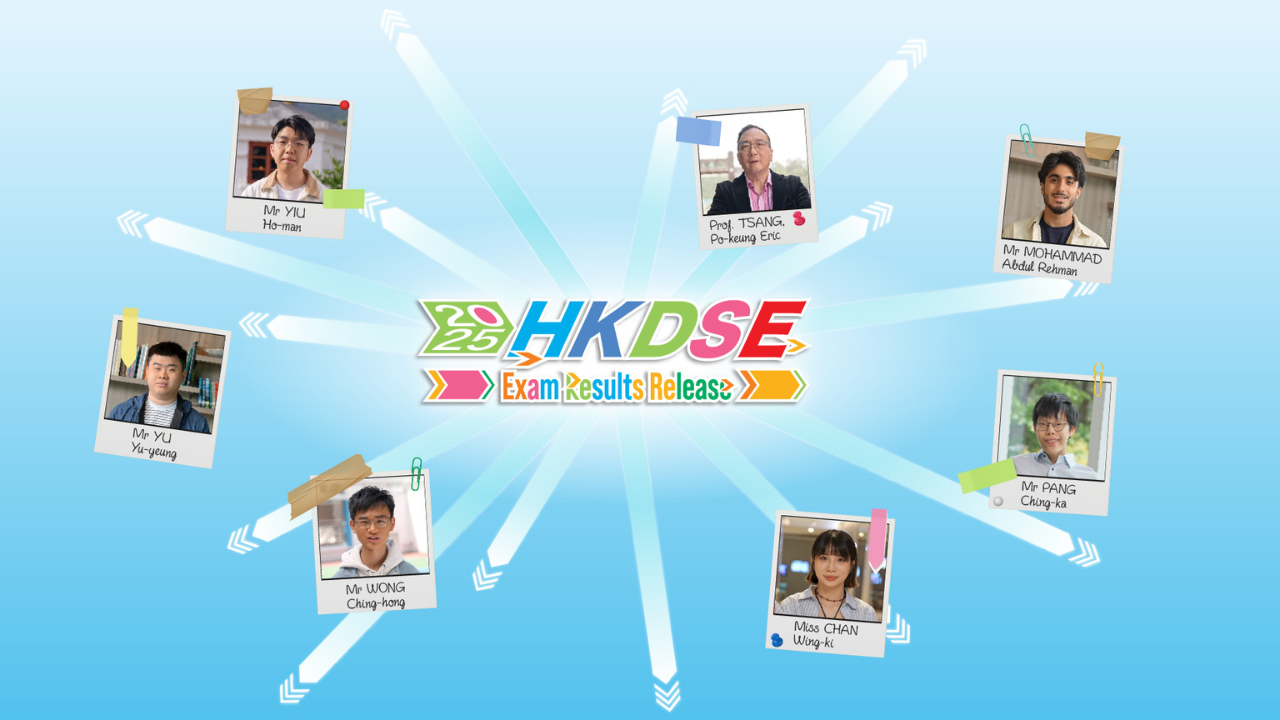
The results of the 2025 Hong Kong Diploma of Secondary Education (HKDSE) Examination will be released on 16 July. The Curriculum Development Institute of the EDB produced “HKDSE Cheer Up Videos – Exam Results Release” for all Secondary 6 students, which includes a 2-minute full version and a 1-minute abridged version. Through sharing by seven guests, students are encouraged to maintain a positive and proactive attitude towards the HKDSE Examination results release day, and plan ahead for their future pathways.
>>Click here to view the Cheer Up Videos and the instant message stickers
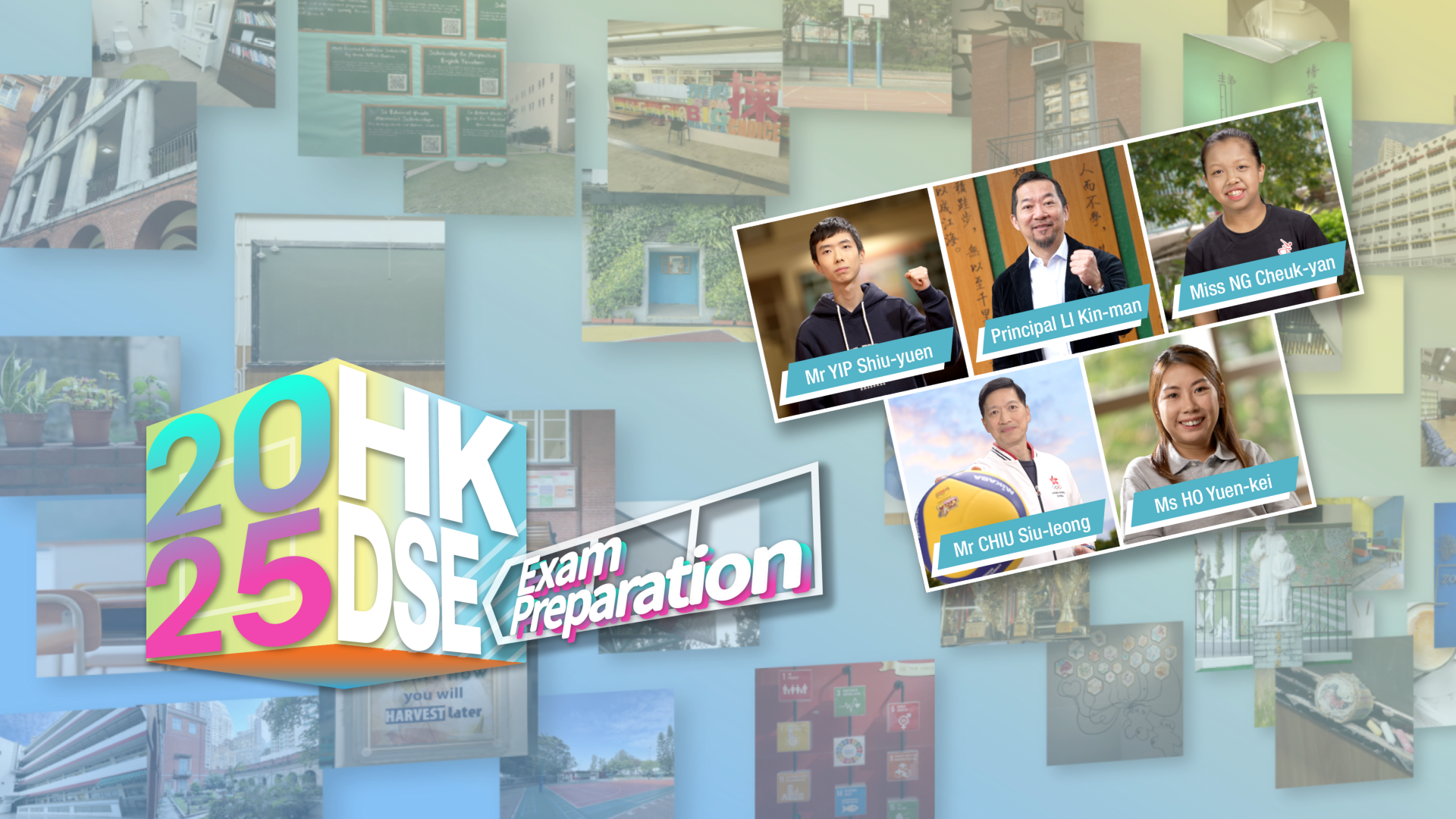
The 2025 HKDSE written examination commences in April. The Curriculum Development Institute of the EDB produced “HKDSE Cheer Up Videos – Exam Preparation” (2025) for all Secondary 6 (S6) students, which includes a 2-minute full version and a 1-minute abridged version. Through sharing by five guests, students are encouraged to embrace challenges with a positive and persevering attitude, creating a positive and caring social atmosphere.
>>Click here to view the five cheer up videos and the HKDSE instant messaging stickers
This year's Hong Kong Diploma of Secondary Education Examination (HKDSE) has already begun. We believe that all candidates have prepared well for their upcoming examinations! However, there are always moments when you feel nervous. Are you still worried about missing something before heading to the examination or before the results release? You can check out the following tips for HKDSE provided by the Education Bureau (EDB), to ensure that your final preparations are done and thus gain a peace of mind before the examination!HKDSE Exam TimetableItem Checklist for HKDSE ExamIn addition to the above preparation tips, the designated webpage for Secondary 6 (S6) students also provides other tips related to result release and multiple pathways ahead, in order to help candidates prepare for different stages under the HKDSE! If you wish to know more about HKDSE, further studies and employment information for S6 students, please visit the designated webpage for more information!>>EDB's Designated Webpage for S6 Students*Source of infographics: EDB's Designated Webpage for S6 Students